Adoption Patterns of Immersive Technology in Interactive Prediction Platforms for Global Athletic Events
Greta Albrecht · Jul 25, 2026
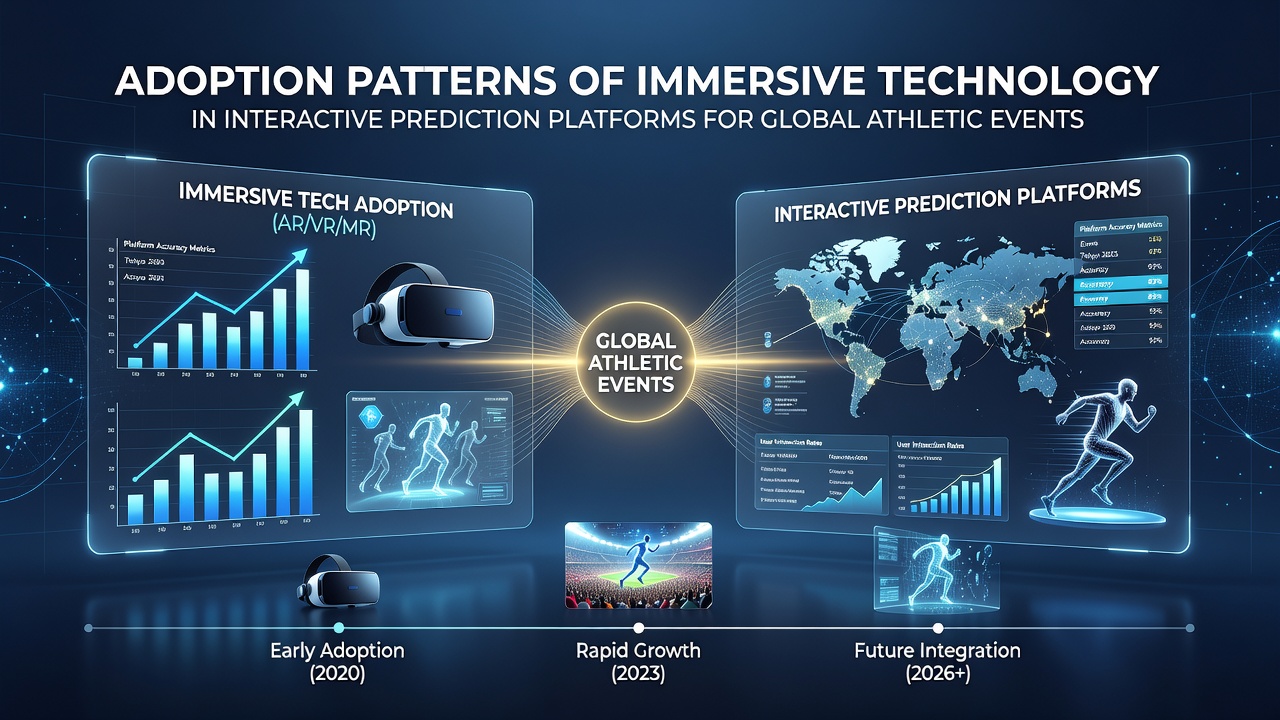
Adoption Patterns of Immersive Technology in Interactive Prediction Platforms for Global Athletic Events
Immersive technologies including virtual reality headsets and augmented reality overlays have entered interactive prediction platforms for global athletic events at varying rates since 2023, and data from multiple regions shows steady integration through mid-2026. Researchers tracking user engagement report that platforms incorporating VR environments allow participants to experience simulated stadiums where prediction interfaces appear as three-dimensional elements, while AR features superimpose live statistics onto mobile screens during events such as the FIFA World Cup qualifiers and Olympic competitions.
Regional Differences in Technology Uptake
North American operators led early implementation when several platforms introduced AR tools for American football and basketball events in 2024, and Canadian regulators documented a 34 percent rise in AR session times by the start of 2026. European markets followed with slower but consistent growth, as providers in Germany and France tested VR prediction rooms that replicate press-box views, and figures from the European Commission indicate adoption rates climbed from 12 percent of active users in 2024 to 29 percent by July 2026.
Asia-Pacific regions displayed distinct patterns where mobile-first AR applications gained traction faster than full VR setups, and government reports from Singapore and Australia highlight that urban users aged 18 to 34 accounted for the majority of new immersive sessions during the 2025 Asian Games cycle. Meanwhile Latin American platforms focused on hybrid models that combine smartphone AR with occasional VR tournament hubs, and industry surveys note higher retention when these tools align with local soccer leagues rather than imported events.
Platform Features Driving Integration
Prediction platforms have embedded spatial audio and gesture-based controls that let users adjust odds displays through hand movements inside virtual spaces, and studies conducted by the OECD on digital entertainment adoption show these features reduce cognitive load during live events. One platform operating across multiple continents introduced a shared VR arena where participants from different countries place predictions together in real time, and internal metrics released in early 2026 revealed that group sessions increased average dwell time by 47 minutes compared with standard interfaces.
Technical standards developed by the IEEE have influenced how platforms handle latency in live prediction feeds, and developers report that 5G network expansion in urban centers has removed many previous barriers to seamless VR experiences. Data collected through July 2026 indicates that platforms using blockchain for transparent prediction ledgers inside immersive environments saw fewer disputes over outcome verification, particularly during multi-sport festivals.
Challenges and Infrastructure Requirements
Hardware costs remain a limiting factor in emerging markets, where full VR headsets still represent a significant expense for average users, and observers note that many platforms therefore prioritize lightweight AR applications that run on existing smartphones. Regulatory frameworks in Australia and Canada require clear disclosure of immersive features to protect participants from excessive session lengths, and compliance reports show operators adjusting interface timers accordingly.
Interoperability between different headset brands continues to present development hurdles, yet collaborations between platform providers and device manufacturers have produced standardized APIs that simplify content delivery. Research from academic institutions in Japan documents that users who receive guided onboarding tutorials adopt immersive prediction tools at twice the rate of those who navigate independently, and similar findings appear in European user studies completed in 2025.
Emerging Trends Through Mid-2026
By July 2026 several major athletic events had incorporated official immersive prediction zones within stadium apps, allowing spectators to layer virtual data onto physical surroundings, and attendance figures at these venues reflected increased engagement when AR elements synchronized with on-field action. Platforms that combined prediction mechanics with social VR spaces reported higher daily active users during the European summer tournament season, and cross-border data sharing agreements facilitated consistent experiences for international participants.
Security protocols for immersive environments now include biometric verification tied to headset sensors, and industry associations in North America and Asia have published guidelines that address data privacy within these three-dimensional interfaces. Adoption continues to correlate strongly with broadband penetration and device affordability, creating measurable gaps between high-income and middle-income regions that operators attempt to narrow through progressive web applications.
Conclusion
Patterns of immersive technology adoption in interactive prediction platforms reveal a landscape shaped by regional infrastructure, regulatory environments, and platform design choices, and available data through July 2026 points to continued expansion wherever hardware access improves. Observers tracking these developments note that successful implementations balance technical capability with user accessibility, and future growth will depend on sustained collaboration between technology providers, event organizers, and governing bodies across different continents.