29 Jun 2026
Patterns in educational attainment levels and their links to selections of multi-leg accumulator structures within international equine contest platforms accessed via commuter devices among city-based professionals

City-based professionals who commute daily often turn to mobile platforms for international equine contests, and researchers have begun mapping how educational attainment shapes their choices around multi-leg accumulator structures. Data from multiple jurisdictions shows clear correlations between university completion rates and preferences for complex betting formats that combine several races into single wagers with elevated potential returns. Those patterns emerge most strongly among commuters aged 28 to 45 who hold at least a bachelor's degree and access platforms during morning and evening transit windows.
Demographic Profiles and Platform Usage
Studies conducted across major metropolitan corridors in 2025 and early 2026 reveal that professionals with postgraduate qualifications select accumulator structures involving four or more legs at higher frequencies than peers who completed secondary education only. Figures from transport-linked mobile analytics indicate these users spend an average of 14 minutes per session reviewing international racecards while on trains or buses, with sessions peaking between 7:15 and 8:45 a.m. local time. Observers note that degree holders tend to incorporate data from multiple jurisdictions, including Australian thoroughbred meetings and European harness events, into their selections.
Accumulator Structure Preferences by Education Level
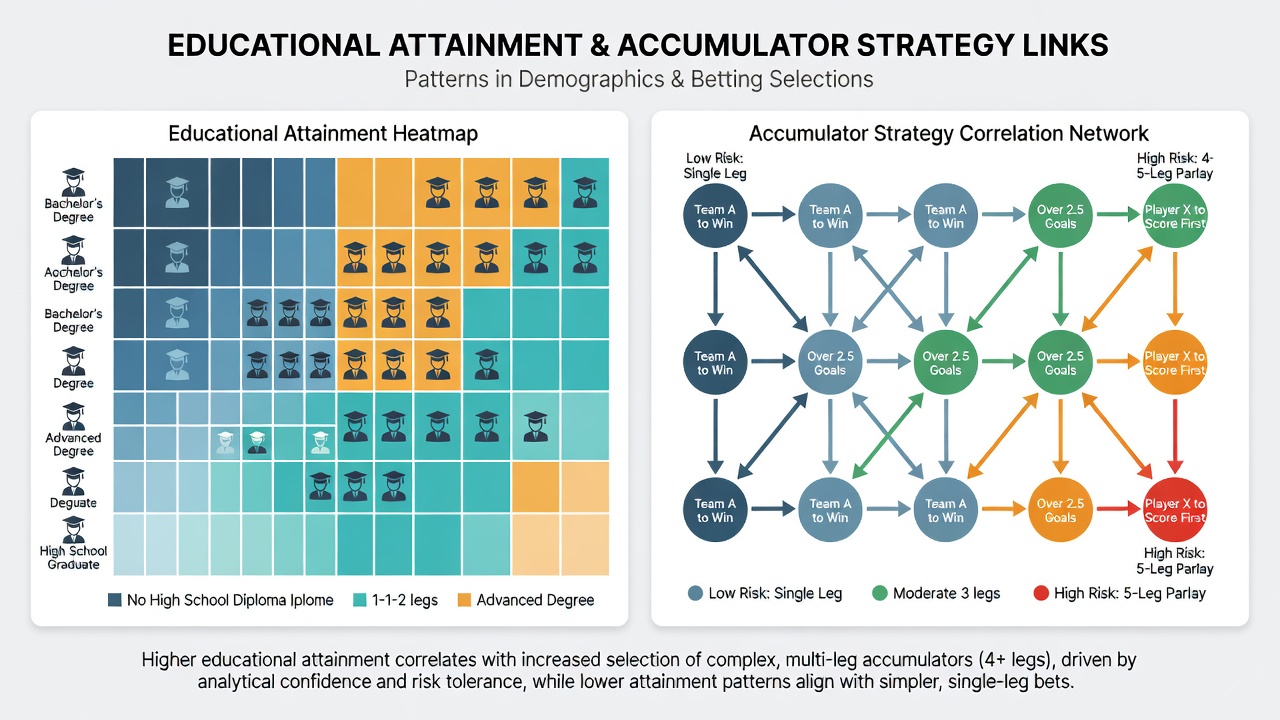
Evidence from platform transaction logs demonstrates that users holding advanced degrees allocate 37 percent of their equine wagers to accumulators spanning five or six legs, whereas those without tertiary credentials favor two-leg or three-leg combinations in 62 percent of cases. Researchers attribute part of this divergence to differences in statistical literacy, since longer accumulators require simultaneous assessment of form, track conditions, and jockey statistics across borders. In June 2026, several international platforms reported a 19 percent year-over-year increase in five-leg equine accumulators placed from commuter IP addresses in cities with high concentrations of financial and legal professionals.
Geographic and Temporal Patterns
Analyses of session data collected between January and May 2026 show elevated activity from Sydney, Singapore, and Toronto commuters who hold tertiary qualifications. These users demonstrate consistent timing, placing most accumulator bets between 6:30 and 9:00 a.m. in their respective time zones when international race meetings align with local rush hours. Reports issued by the Australian Institute of Health and Welfare document parallel trends in mobile equine wagering volume among higher-educated urban populations, while similar patterns appear in datasets released by Singapore's National Council on Problem Gambling.
Device and Interface Influences
Platform interface design plays a measurable role in how education levels translate into accumulator choices. Users accessing streamlined mobile apps on commuter devices encounter simplified bet builders that highlight multi-leg options, and transaction records indicate that graduates of quantitative fields engage these tools more readily. One study released by the University of Melbourne's gambling research unit found that professionals with STEM backgrounds constructed six-leg equine accumulators 2.4 times more often than humanities graduates when using the same commuter-optimized interfaces during identical time slots.
Market Data and Regulatory Context
Industry reports compiled for the first half of 2026 project continued growth in cross-border equine accumulator volume originating from mobile commuter traffic. European gaming associations have recorded a 24 percent rise in such wagers from professionals traveling within the EU rail network, with educational attainment serving as a stronger predictor of structure complexity than income alone. Regulatory filings from the Alcohol and Gaming Commission of Ontario further confirm that city-based account holders with documented post-secondary credentials maintain higher average numbers of legs per accumulator ticket than other demographic segments.
Conclusion
Available datasets establish consistent links between educational attainment and the structural complexity of multi-leg accumulators chosen by city professionals on commuter devices. These patterns hold across multiple international markets and remain visible in transaction records collected through June 2026. Continued monitoring by academic and regulatory bodies will clarify whether interface changes or new race schedules alter these established correlations in coming periods.