Urban Transit Rhythms Shaping Timing Strategies for In-Play Football Markets on Handheld Platforms
Harper Baumann · Jun 17, 2026
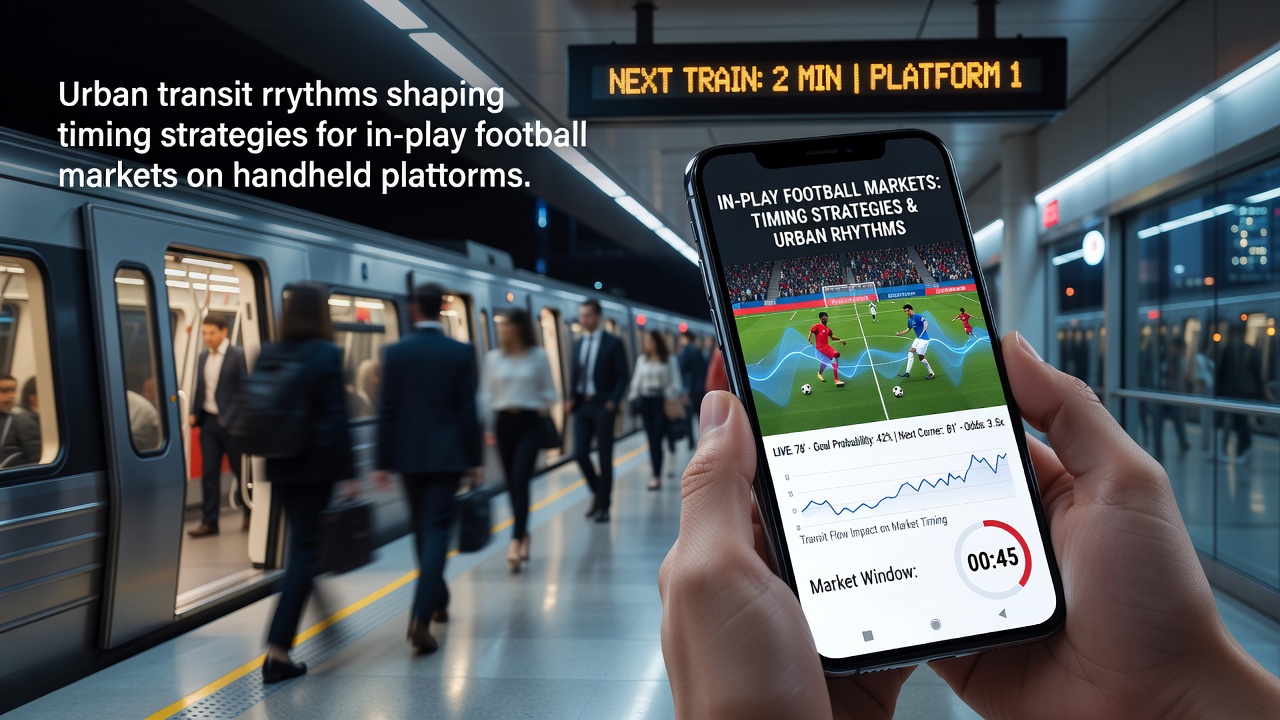
Urban Transit Rhythms Shaping Timing Strategies for In-Play Football Markets on Handheld Platforms
Urban transit systems create predictable windows where mobile data access and user attention align with live football markets, and observers note how these rhythms directly influence when bettors engage with in-play odds on handheld platforms. Morning and evening rush periods generate consistent spikes in session starts across major European and North American cities, while midday lulls produce steadier but lower-volume activity that platforms track through aggregated location data.
Commute Schedules and Peak Betting Windows
Data from transport operators shows commuters spend an average of 45 to 70 minutes daily on trains or buses in cities such as Paris, Berlin, and Toronto, and these intervals overlap with afternoon football fixtures scheduled between 3pm and 7pm local time. Bettors often initiate in-play wagers during the initial 15 minutes of their journey when signal strength remains stable, then pause activity near tunnel sections or transfer points where connectivity drops. Researchers tracking anonymized app telemetry find that goal-scoring moments trigger rapid order placement clusters precisely when trains approach stations with strong 5G coverage, creating micro-timing advantages for users who monitor route maps alongside match feeds.
Signal Reliability and Strategic Adjustments
Platform operators adjust odds refresh rates according to regional transit maps because signal blackouts on certain subway lines force users to queue bets in advance or switch to cached interfaces. In London and New York networks, for instance, engineers record packet loss rates exceeding 40 percent between specific underground segments during June 2026, prompting betting applications to introduce pre-load features that lock selections before users descend into stations. Those who study these patterns observe that successful timing strategies frequently involve placing accumulator adjustments during surface-level tram or bus segments where uninterrupted streaming remains possible for longer stretches.
Mobile Data Patterns Across Different Transit Modes
Light rail and bus corridors produce different engagement curves compared with deep-level metro systems because above-ground routes maintain steadier connections that allow continuous market monitoring. Figures released by the International Association of Public Transport indicate ridership peaks between 7am-9am and 5pm-7pm correlate with elevated click-through rates on live football dashboards, while late-night services after 10pm show fragmented sessions interrupted by shorter journey durations. Bettors adapt by favoring markets with slower resolution times such as next-team-to-score or total corners when traveling on routes known for frequent interruptions, and they reserve high-volatility options like next-goal timing for segments with proven connectivity.
Studies conducted by university transport research groups reveal that passengers traveling longer distances exceeding 30 minutes demonstrate higher completion rates for multi-leg in-play bets, whereas short-hop users concentrate activity on single quick-fire markets. This distinction appears consistently across data sets collected from both high-density Asian megacities and mid-sized European hubs, suggesting route length serves as a reliable predictor of betting depth rather than simple time-of-day variables alone.
Integration of Transit Apps with Betting Interfaces
Several major operators now embed journey planners that cross-reference real-time transit updates with match schedules, allowing users to receive alerts when approaching areas of strong coverage just before key match events. According to reports published by the European Commission Directorate-General for Mobility and Transport, such integrations reduce failed bet submissions by approximately 18 percent during peak commuting windows in tested pilot cities. Users combine live departure boards with in-play timers so they can execute cash-out decisions while waiting on platforms rather than inside signal-dead carriages, and developers continue refining geofenced prompts that activate only when devices detect proximity to known high-coverage zones.
Regional Variations in Timing Effectiveness
North American light-rail networks exhibit more uniform coverage than older European underground systems, which leads to broader distribution of betting activity throughout entire journeys rather than concentrated bursts near stations. Canadian and Australian transport authorities publish open ridership statistics that betting analysts cross-reference with time-stamped transaction logs, revealing how weekend football schedules shift peak engagement later into evening leisure commutes compared with weekday work patterns. Observers tracking these differences note that emerging 6G test corridors in parts of Asia already demonstrate near-zero latency during transit, potentially flattening timing advantages that currently favor specific route knowledge in established markets.
Conclusion
Urban transit rhythms continue to define precise windows for in-play football engagement on handheld platforms as commuters align route knowledge with market timing. Aggregated usage data demonstrates consistent correlations between journey segments and betting behavior across multiple continents, while platform adaptations such as pre-loading and geofenced alerts respond directly to these established patterns. As cities expand 5G and future network infrastructure through 2026 and beyond, the interplay between transit schedules and live wagering will likely grow more refined, with timing strategies evolving alongside improvements in coverage reliability and integrated journey tools.